
Direct Debit: Still Direct, Still Trusted
For over a decade, I had the privilege of serving as CEO of Bacs Payment Schemes Limited (Bacs), the Payment System Operator behind the UK’s Direct Debit and Direct Credit schemes.
So when Pay.UK (the latest custodian of the Bacs Direct Debit scheme) published its latest report, “Market Perceptions of Direct Debit”, I read it with more than professional interest - I read it with pride.
With over 5 billion transactions processed annually, Direct Debit remains “still direct, still trusted.” It’s a verdict that carries extra weight given the competition Direct Debit has quietly seen off along the way not least from Request to Pay, a scheme once billed as a serious challenger and now consigned to history. No contest, as it turned out.
It wasn’t so long ago that the Payment Strategy Forum was confidently predicting that the future of bill payments lay elsewhere - in a Single Push Rail and Request to Pay. Yet here we are, and Direct Debit continues to go from strength to strength.
The report doesn’t shy away from the fact that the scheme is showing its age in places, and that’s a fair observation. But even against the backdrop of an uncertain New Retail Payments Infrastructure (NewRPI) and the rise of Commercial Variable Recurring Payments (cVRP’s) as a genuine new contender, I’d back Direct Debit’s pre-eminence to hold for a good while yet.
I remember a Bacs board meeting, back in my tenure, where Direct Debit was described as the Payment System Operator’s “jewel in the crown.” Direct Debit hasn’t seen a great deal of innovation since - but the path to “Direct Debit 3.0” need not be a long one. And when (if?) it arrives, it will only cement that reputation further.
What follows is a summary of Pay.UK’s report and what it means for the future of the UK’s most dependable payment method - you’ll find the full report here.
Inside the UK’s most reliable payment habit and where it still needs work
Direct Debit has quietly powered UK bill payments for over 50 years, and a new report from Pay.UK (produced with research support from Juniper Research) shows the payment method is not just surviving in a world of cards, wallets and open banking, but thriving.
The study surveyed over 2,000 consumers, 307 merchants and 217 banking/fintech leaders to build a full picture of how Direct Debit is used and perceived today.
Direct Debit usage hit a new high in 2025
Direct Debit volumes reached 5 billion transactions in 2025, up nearly 2% on 2024 and a record for the payment method. It’s used across an enormous range of recurring payments — from mobile and broadband bills to council tax, insurance and even holiday payments.
Consumers trust it and prefer it
Direct Debit came out as the single most popular way UK consumers pay for recurring services, chosen by well over a third of respondents ahead of manual and automatic card payments.
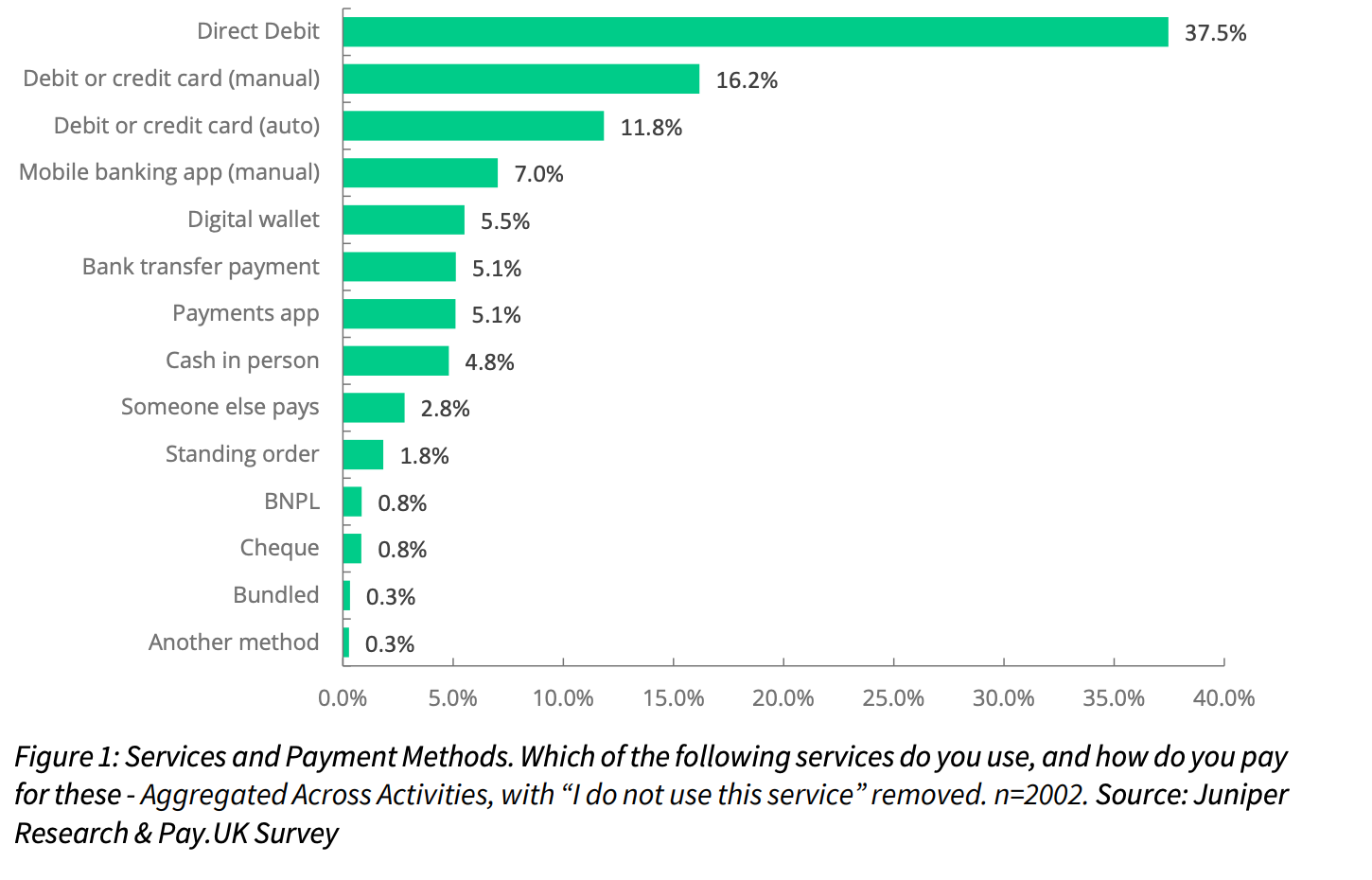
Satisfaction is remarkably high too: 92% of consumers rate their overall experience as positive or strongly positive. That figure dips somewhat among 18–24-year-olds, but even there it stays comfortably high.
Among satisfied users, the predictability of payments, consumers finding Direct Debit reliable (65%) and which helps them plan their finances (60%), followed by the Direct Debit Guarantee (51%) were among the main drivers.
The main reasons people like it are simple: it’s predictable, it’s reliable, and it helps them plan their finances.
The Direct Debit Guarantee is another major factor in consumer confidence, cited by around half of satisfied users.
Where dissatisfaction does exist, it mostly centres on a perceived lack of control over cancelling or amending payments - a small but telling signal about where the experience could be smoother.
Merchants rely on it heavily, especially for B2B
Direct Debit is the second most common payment method merchants accept, behind only bank transfers, and it edges out cards, payment apps and cash. This is partly explained by the survey’s merchant mix, which skews toward businesses selling to other businesses.
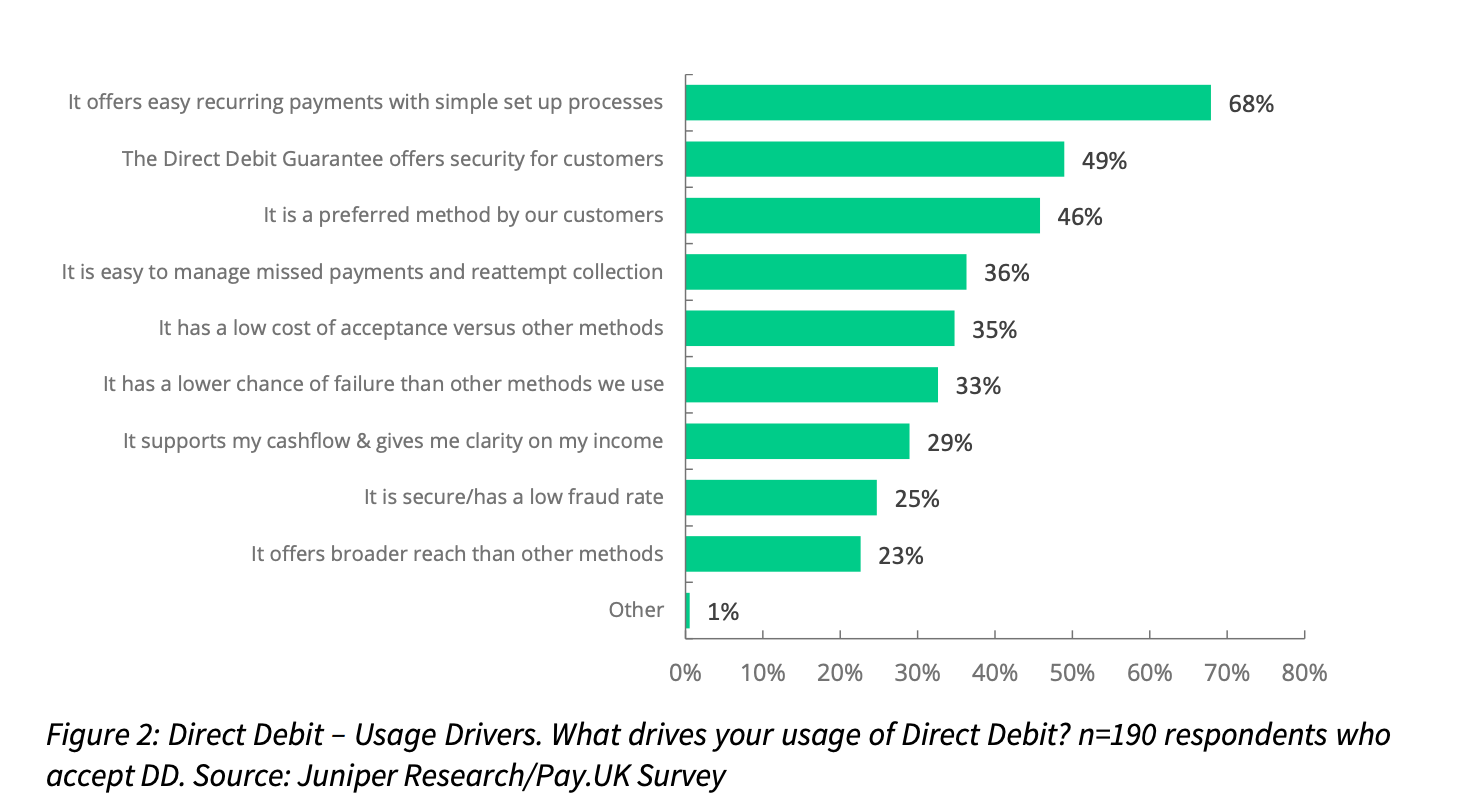
Merchant satisfaction with offering Direct Debit is very high, and the biggest draw is simply how easy it makes recurring billing, closely followed by the protection the Guarantee offers customers.
In the merchant segment, 80% said the Direct Debit Guarantee makes them more likely to offer Direct Debit. Overall, the Guarantee is highly valued across all three segments.
Interestingly, even merchants who don’t currently accept Direct Debit are largely open to it - most said they’d consider adding it in future, suggesting plenty of headroom for further adoption.
Banks and fintechs are all-in
Almost all banks and fintechs surveyed offer Direct Debit, and attitudes toward it are overwhelmingly positive - not a single respondent reported a negative view.
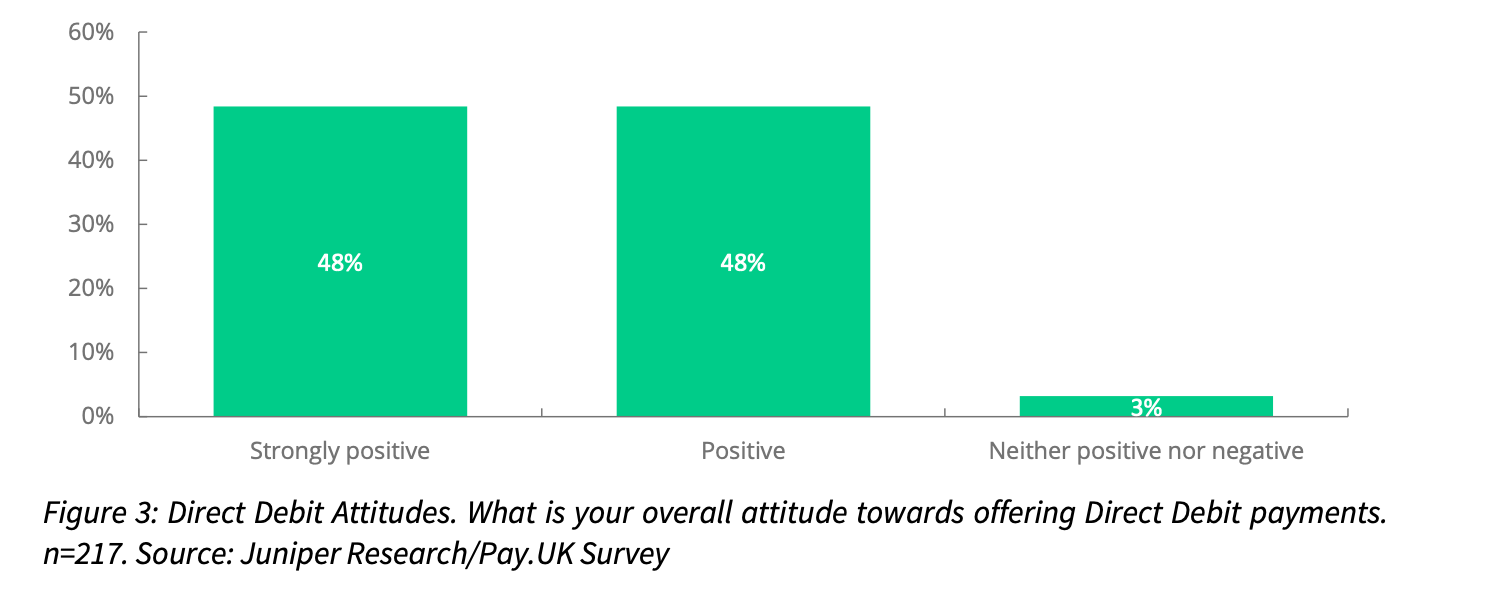
The vast majority see it as delivering better value than other payment methods, and see it as reliable and essential to what they offer customers.
Direct Debit is seen to offer greater value than other payment methods, with 83% of banks and fintechs indicating it delivers better value
That said, a meaningful minority flagged administrative overhead and occasional customer-facing issues as areas needing attention.
The pain points are real, but manageable
No payment method is friction-free, and the report is candid about where Direct Debit falls short:
Consumers: three-quarters reported no issues at all in the past year. Where problems did occur, failed payments due to insufficient funds and difficulty changing payment dates were the most common complaints.
Merchants: a third reported no issues, while the rest pointed to difficulties making changes, managing Guarantee claims, and delays in receiving funds.
Banks and fintechs: payment delays and time-consuming setup processes were the top complaints, followed by concerns about payment failure rates.
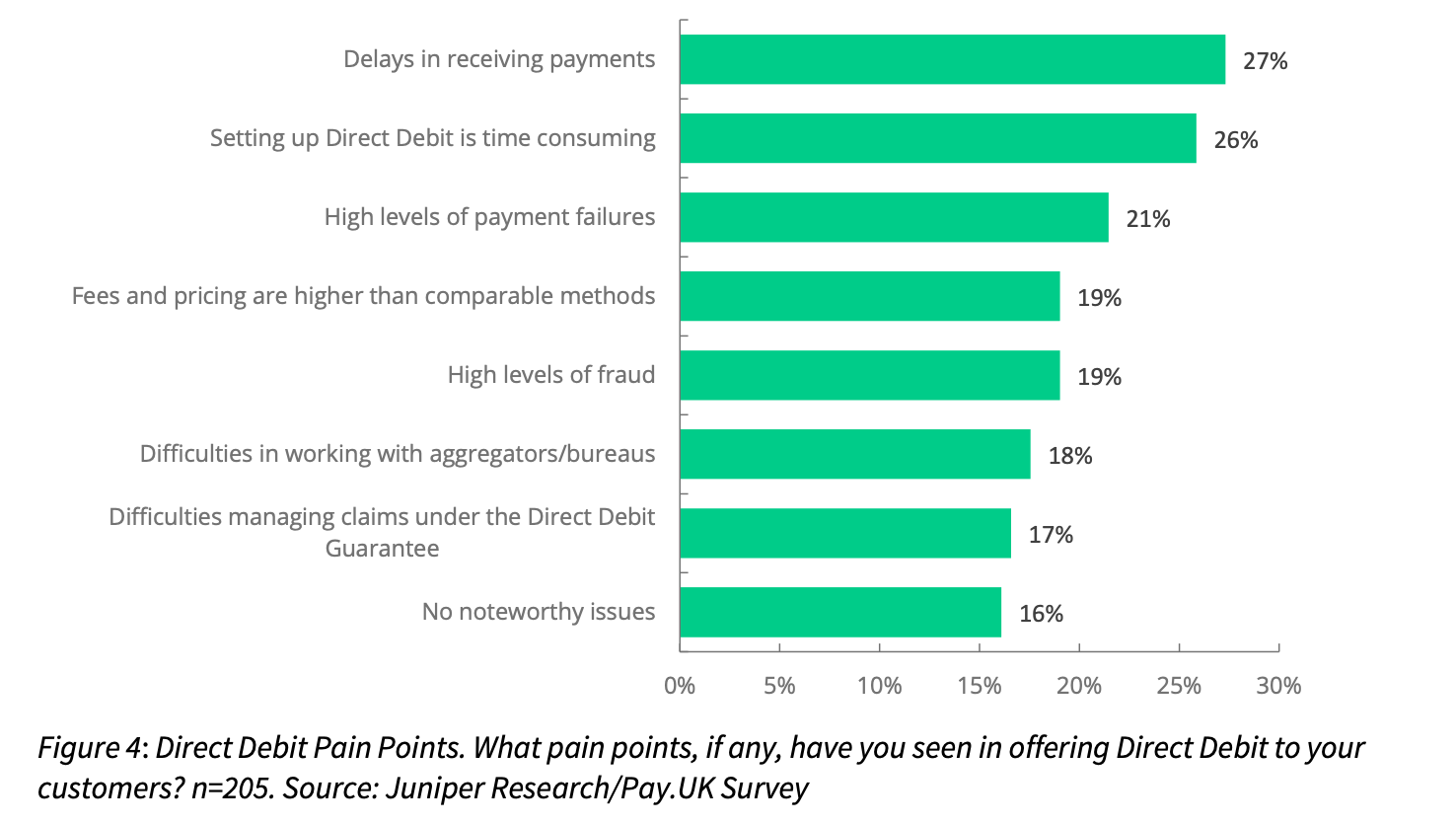
None of these issues dominate - they’re spread fairly evenly - which suggests the fixes needed are incremental rather than fundamental: better tooling, faster failure notifications and simpler setup flows.
The Direct Debit Guarantee is a genuine asset
The Direct Debit Guarantee - the promise that consumers get an immediate refund if something goes wrong - is clearly one of Direct Debit’s strongest cards.
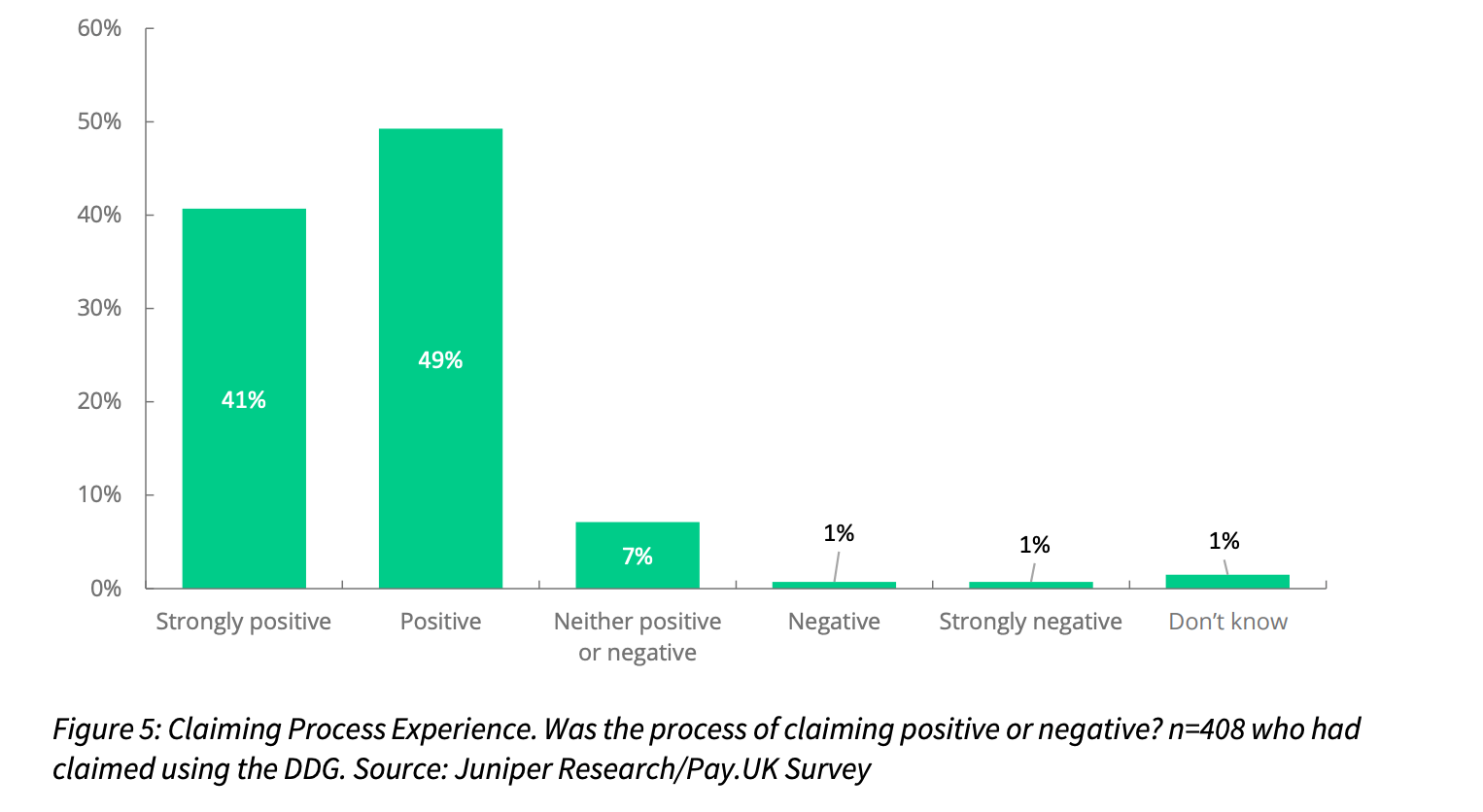
Among consumers who’d actually made a claim, the experience was overwhelmingly positive. And once people understand what the Guarantee actually does, confidence in Direct Debit rises sharply.
For merchants, the effect is just as strong: the large majority said knowing about the Guarantee makes them more likely to offer Direct Debit as a payment option.
But there’s a knowledge gap — especially among younger users
Not everything is rosy.
While general awareness of Direct Debit is nearly universal, the report uncovered widespread confusion about what Direct Debit actually is.
A significant share of consumers mistakenly associate it with payment cards rather than direct bank account instructions - a confusion that’s especially pronounced among 18–24-year-olds.
Similarly, some younger respondents confused the Direct Debit Guarantee with standard card chargeback rights, suggesting the two protection mechanisms are blurring together in people’s minds.
This points to a real opportunity: better consumer education could unlock even higher trust and usage among younger demographics who are still forming their financial habits.
Preserve and progress
Pay.UK’s conclusion is essentially “preserve and progress.”
Direct Debit’s core strengths - predictability, control, and the safety net of the Guarantee - are exactly what stakeholders across the ecosystem value most, and none of that should be lost as UK payments infrastructure evolves.
At the same time, there’s clear room to reduce friction around payment failures, delays, and the amendment process, and to close the awareness gap among younger users.
The report also flags Direct Debit as just one part of a broader recurring payments toolkit. Newer mechanisms like commercial variable recurring payments (cVRPs) are positioned, by Pay.UK, as complementary rather than competing — extending choice and flexibility rather than replacing what already works.
Source: Pay.UK, “Market Perceptions of Direct Debit” (28 July 2026), developed with research support from Juniper Research.